UK Pickleball Growth 2026: What the Participation Data Shows
How fast pickleball has really grown in England: Sport England's 20,000 to 74,800, and why the biggest circulating numbers do not hold up.
Pickleball is described as Britain's fastest-growing sport so often that the claim has stopped carrying much information. The useful question is narrower: how many people actually play, how quickly has that number moved, and how much confidence do the figures deserve? Two independent sources track it, they broadly agree on the trajectory, and the gap between them is itself worth understanding.
One caveat before the numbers, because it is routinely glossed over: the best data covers England, not the UK. Sport England surveys England only, and Pickleball England is the governing body for England. Scotland, Wales and Northern Ireland have their own bodies and are not inside these totals.
How many people play pickleball in England?
The official measure is Sport England's Active Lives survey, which first included pickleball in its report covering November 2022 to November 2023. It found 20,000 core players: adults aged 16 and over who had played at least twice in the month before being surveyed, in sessions of at least 60 minutes. On the looser measure of playing at least once in the year, the same survey period recorded 27,300 adults.
The most recent figure is far higher. Announcing a membership milestone in June 2026, Pickleball England cited an Active Lives estimate of 74,800 players in England and said it believed the true total was closer to 80,000.
How fast has UK pickleball actually grown?
Two separate measures, counting different things, land on a similar answer: roughly a tripling in about two and a half years.
On the survey side, Active Lives moved from 20,000 core players in the 2022-23 report to the 74,800 figure Pickleball England cited in June 2026. On the membership side, Pickleball England reported 6,008 registered members for 2023, a 60% year-on-year rise, and passed 19,000 by June 2026. Venues followed the same curve: 284 in 2022, then 449 in 2023, a 58% increase in a single year.
That agreement between an independent national survey and a governing body's own membership roll is the strongest evidence available. Neither measure is complete, but they are not measuring each other, and they point the same way.
Why do the participation numbers disagree?
Because they count different populations, and one of them undercounts by design.
Membership counts only people who pay to register with the governing body, which will always be a fraction of everyone who plays. The survey counts self-reported participation, but for its early rounds pickleball had no preset option in the racket-sports question: respondents had to choose 'Other' and write the sport in by hand. Anyone who did not take that extra step went uncounted, which is why Pickleball England argued at the time that the 20,000 figure was conservative. Its own estimate for that period was around 15,000 registered-and-informal players, later revised up to 25,000.
It is also worth treating the largest circulating numbers with care. Figures of 200,000 UK players appear in commercial roundups, but that is more than double what the governing body itself estimates for England, and we have not found a published methodology behind it. Where an estimate cannot be traced to a survey or a membership roll, it is best read as marketing rather than measurement.
Where is the growth coming from?
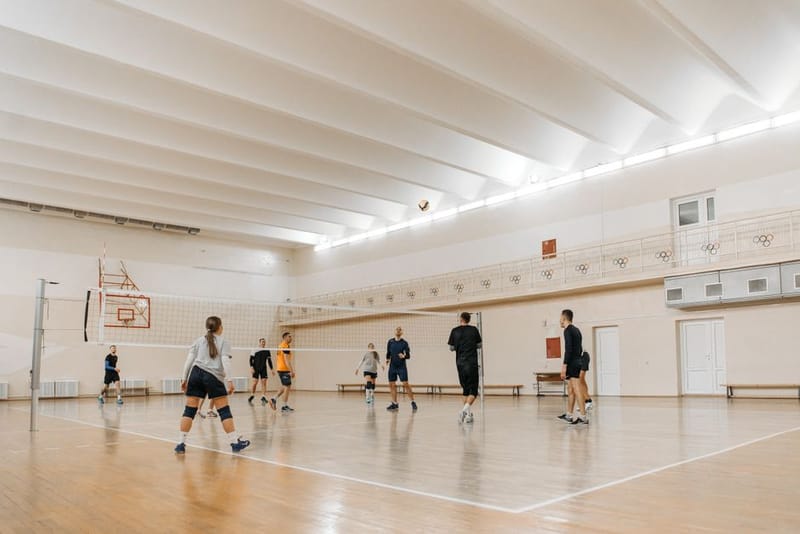
Venue conversion has done most of the early work. Pickleball needs a smaller court than tennis and shares dimensions closely enough with badminton that a sports hall can be re-lined and used the same week, which is why leisure centres could add sessions faster than any dedicated build would allow. That is also why venue counts rose in step with player numbers rather than lagging them.
Competition has scaled alongside the casual game. Pickleball England listed close to 3,400 registered players for the 2026 English Open, which points to a tournament circuit maturing rather than a purely social sport. Regional clusters have formed at noticeably different speeds, which is the pattern the city guides below trace in more detail.
How many people play pickleball in England?
Is pickleball the fastest-growing sport in the UK?
How many pickleball venues are there?
Do these figures cover the whole UK?
Why do some sources claim 200,000 UK players?
Pickleball in Birmingham

Pickleball in Edinburgh and Glasgow