Comparison · 3 picks
Best Pickleball Paddle for Beginners UK 2026
Affiliate disclosure: we may earn a commission when you buy through links on this page, at no extra cost to you. Our verdicts are our own and are not influenced by compensation. As an Amazon Associate I earn from qualifying purchases.
A beginner paddle needs a big sweet spot, a manageable weight and a price that does not sting if the sport does not stick. The JOOLA Solaire, a former pick, has been dropped from this guide.
Picks are drawn from cross-referenced manufacturer spec sheets, UK retailer listings and independent paddle reviews rather than single first-person impressions. Prices and availability were checked against UK retailers on 10 July 2026; where an item links to one of our product pages, the price shown updates automatically. For the decision framework itself, see how to choose a pickleball paddle.
At a glance
All 3 options side by side.
| Selkirk SLK Latitude 2.0 | Vatic Pro V7 | 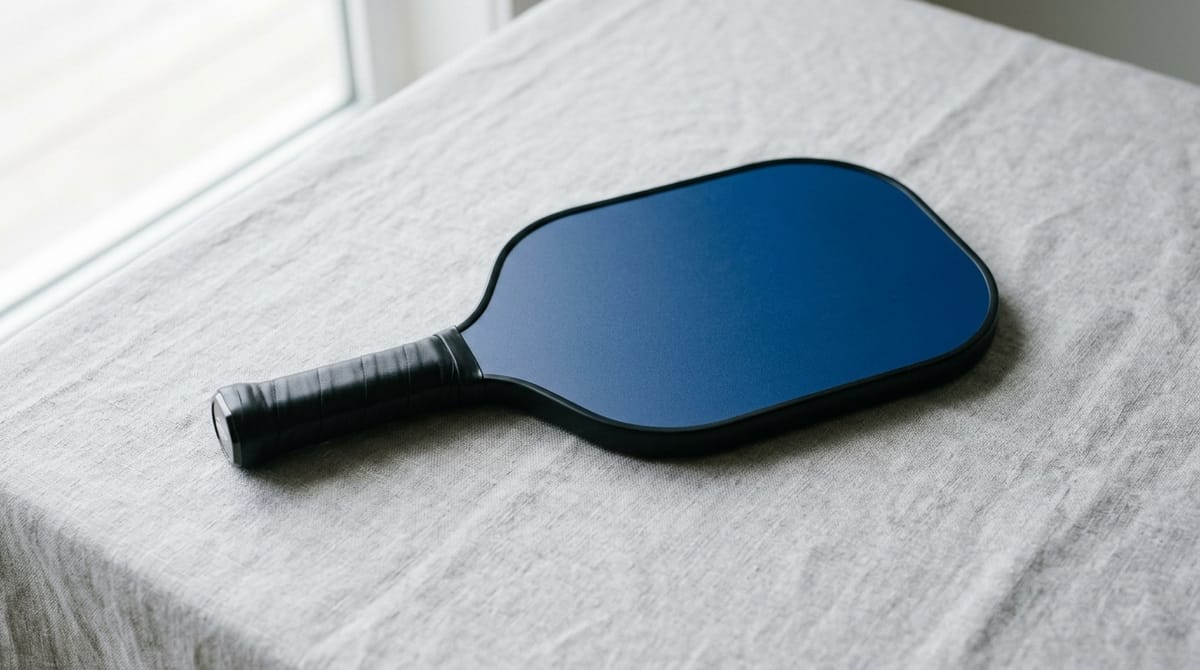 | |
|---|---|---|---|
| Price | See price | - | £30 |
| Best for | G4 graphite face, Rev-Core+ polymer core and a big, honest sweet spot. | TORAY T700 raw carbon at a price the big brands cannot match. | the lowest-risk way to try pickleball in the UK. |
| Review | Read review → | Read review → | Read review → |
| Buy |
The picks in detail
Selkirk SLK Latitude 2.0
Bottom line. Selkirk's entry line done properly: G4 graphite face, Rev-Core+ polymer core and a big, honest sweet spot. It plays a clear level above bargain-bin paddles and holds its value if you upgrade later.
Pros
- Real brand build quality at entry money
- Large, forgiving sweet spot
- SpinFlex surface adds usable grip
Cons
- Costs more than test-the-sport options
- Graphite face caps top-end spin
Vatic Pro V7
Bottom line. The committed beginner's shortcut: TORAY T700 raw carbon at a price the big brands cannot match. Elongated shape adds reach and power as you improve - the paddle you will not need to replace at month six.
Pros
- Raw T700 carbon face at entry-plus money
- Grows with you into intermediate play
- Strong UK stock via Pickleball People
Cons
- Elongated shape narrows the sweet spot slightly
- Heavier feel than typical starter paddles
Decathlon Perfly Decathlon Pickleball Paddle 100
Bottom line. £30, in-store nationwide, 365-day returns: the lowest-risk way to try pickleball in the UK. Fibreglass face over a polypropylene core is genuinely fine for social play - just not tournament-legal.
Pros
- £30 is unbeatable for a first paddle to test whether pickleball sticks
- Decathlon UK retail makes it the easiest pickleball paddle to buy in the UK
- Returns policy via Decathlon's standard 365-day window
- Light enough for first-time players to swing comfortably
- Functional for casual social play
Cons
- Fibreglass face provides minimal spin vs carbon-fibre alternatives
- Not USAPA-approved - not legal for tournament play
- Build quality reflects the £30 price point - 6-12 months of regular use before noticeable degradation
- Sweet spot meaningfully smaller than mid-tier paddles
- No 13mm vs 16mm core options
What should a beginner look for in a paddle?
Forgiveness first. A wide-body paddle with a large sweet spot punishes an off-centre hit far less than an elongated one, and in the first months almost every hit is off-centre. Reach and spin potential matter later; being able to keep a rally alive matters now.
Weight is the other thing worth getting roughly right, because it is the spec most likely to cause discomfort rather than just underperformance. Too light and you swing through the ball without control; too heavy and the wrist and elbow take the strain over a long session. Middle weight suits most starters, and our choosing guide works through weight, core thickness, face material, shape and grip size properly rather than repeating them here.
Two things beginners over-weight. Tournament approval is irrelevant unless you expect to enter sanctioned competition inside your first year, and casual club play does not ask for it. And the first paddle is a consumable, not an heirloom: at two or three sessions a week most people want a different paddle within a year anyway, once they know whether they play a control game or a power one. Spending to a level you would not mind replacing is a feature of the decision, not a compromise in it.
Which of these three suits you?
Selkirk SLK Latitude 2.0 is the pick if you are already fairly sure the sport will stick. It brings real brand build quality at entry money with a large, forgiving sweet spot and a SpinFlex surface that adds usable grip on the ball. The trade is that it costs more than the test-the-sport options, and its graphite face caps top-end spin, so a committed player will feel its ceiling sooner than its floor.
Vatic Pro V7 suits someone who already knows they are committed, or who arrives from tennis, squash or badminton with racket-sport instincts intact. It puts a raw T700 carbon face at entry-plus money and grows with you into intermediate play. In exchange the elongated shape narrows the sweet spot slightly, and independent reviews consistently describe it as heavier than a typical starter paddle, which is a genuine cost if your technique is still forming.
Decathlon Pickleball Paddle 100 is the answer to a different question: not 'which paddle', but 'is this sport for me'. You can walk into a store, and the 365-day returns policy means an unconvincing month costs you nothing. It is not USAPA-approved, so it is not a tournament paddle, and it is the one of the three you are most likely to outgrow. That is the point of it.
If you cannot choose between the first two, the honest tiebreak is how certain you are. Uncertainty argues for spending less and learning what you like; certainty argues for the paddle you will not want to replace in six months.
The upgrade path
Start cheap, learn the kitchen game, then upgrade once you know your style: our main paddle guide covers the tiers above, and the choosing guide explains the specs that actually matter.